
ETP continues treatment processes with high filtration water clarity to provide an advanced level of organic and suspended solids removal. When designed accordingly, these systems can also provide an advanced level of organic & Inorganic waste removal. This level of filtration allows high quality effluent to be drawn through the sedimentation and filtration processes typically used for wastewater treatment. Because the need for sedimentation is eliminated, the biological process can operate at a much higher mixed liquor concentration. The mixed liquor is typically kept in the 1.0-1.2% solids range, which is 4 times that of a conventional plant.
Turnkey Projects
A. Effluent Water Treatment Plant
- Effluent Treatment Plant (ETP)
- Ultra Filtration (UF)
- Reverse Osmosis (RO)
- DM Plants
- Multiple Effect Evaporator (MEE)
- DAF System
- Zero Liquid Discharged Plant (ZLD)
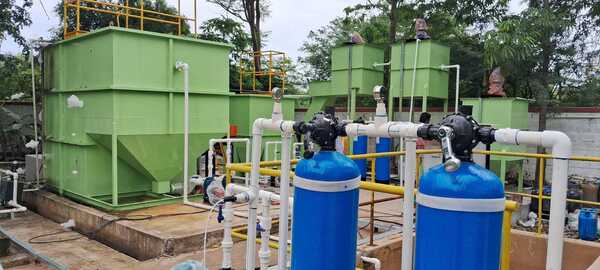
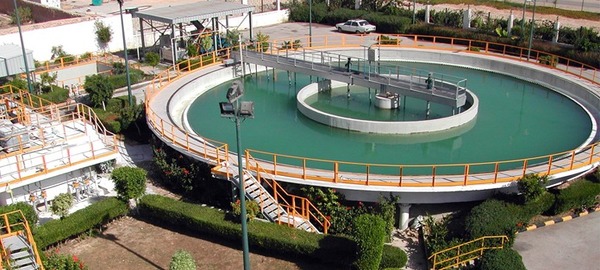
Working Principle of ETP Aeration Technology
Treatment Description
The raw Effluent will be received at the bar screen to prevent large floating objects such as trash, cloth, plastic sheets, etc. from entering the sump. The screened Effluent will pass through an oil removal chamber for removal of oil. The screened Effluent flows into the Collection cum equalization tank. Coarse bubble diffuser is provided at the bottom of the tank to provide air agitation. Eq. Tank transfer pumps transfer this Effluent to the chemical treatment system. A fine screen of 10 mm rating is placed at the entry to the aeration tank to screen out any particles larger than 1 mm. The over flow from the fine screen flows into the anoxic tank.
B. Sewage Water Treatment Plant
- Activated Sludge Process (Conventional Method)
- Moving Bed Bio Reactor (MBBR)
- Fluidized Bed Bio Reactor (FBBR)
- Sequence Batch Reactor (SBR)
- Membrane Bio Reactor (MBR)
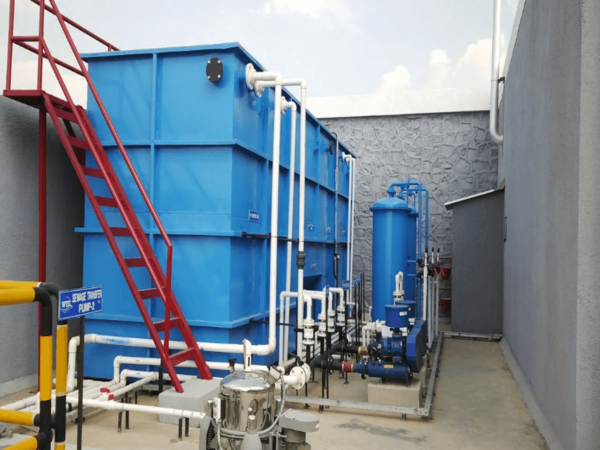
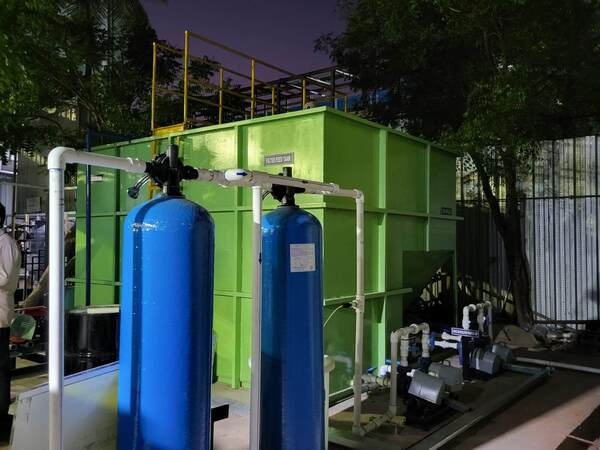
Working Principle of STP Aeration Technology
BIO Aeration combine conventional biological treatment processes with high filtration water clarity to provide an advanced level of organic and suspended solids removal. When designed accordingly, these systems can also provide an advanced level of nutrient removal.
This level of filtration allows high quality sewage to be drawn through the sedimentation and filtration processes typically used for wastewater treatment. Because the need for sedimentation is eliminated, the biological process can operate at a much higher mixed liquor concentration. This dramatically reduces the process tank age required and allows many existing plants to be upgraded without adding new tanks. The mixed liquor is typically kept in the 1.0-1.2% solids range, which is 4 times that of a conventional plant.
Treatment Description
The raw Sewage will be received at the bar screen to prevent large floating objects such as trash, cloth, plastic sheets, cigarette butts etc. from entering the sump. The screened Sewage will pass through an oil removal chamber for removal of oil. The screened Sewage flows into the Collection cum equalization tank. Coarse bubble diffuser is provided at the bottom of the tank to provide air agitation. Eq. Tank transfer pumps transfer this Sewage to the chemical treatment system. A fine screen of 10 mm rating is placed at the entry to the aeration tank to screen out any particles larger than 1 mm. The over flow from the fine screen flows into the anoxic tank.
C. Drinking Water Plant
Drinking water Plants for Panchayat, Municipalities requirement with Coin & Smart Card Dispenser.
- Reverse Osmosis plant
- Softener
- Iron removal units
- Filtration plants (Sand & Carbon)
- Ultra filtration
- Nano filtration
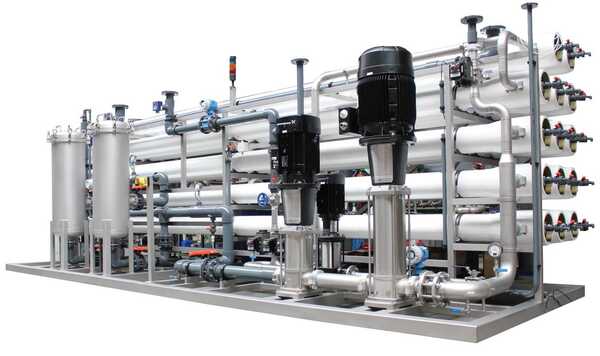

D. DM Plants:
Softening alone is insufficient for most high-pressure boiler feedwaters and for many process streams, especially those used in the manufacture of electronics equipment. In addition to the removal of hardness, these processes require removal of all dissolved solids, such as sodium, silica, alkalinity, and the mineral anions (Cl¯, SO4²¯, NO3¯).
Demineralization of water is the removal of essentially all inorganic salts by ion exchange. In this process, strong acid cation resin in the hydrogen form converts dissolved salts into their corresponding acids, and strong base anion resin in the hydroxide form removes these acids. Demineralization produces water similar in quality to distillation at a lower cost for most fresh waters.
E. Zero Liquid Discharge (ZLD) System:
Best Practice – Zero Liquid Discharge (ZLD) System is a ultimate cutting-edge wastewater treatment process developed to completely eliminate all liquid discharge from a system. The goal of a zero liquid discharge system is to reduce the volume of wastewater that requires further treatment, economically process wastewater and produce clean stream suitable for reuse.
The ZLD System removes dissolved solids (mainly salt) from the wastewater and returns pure water to the process. Reverse osmosis (membrane filtration) is used to concentrate pre-treated waste stream and return the clean permeate to the process, funnel the reject to an evaporator, and send the evaporator concentrate to a crystallizer or spray dryer. The condensate from evaporator also returned to the process.
